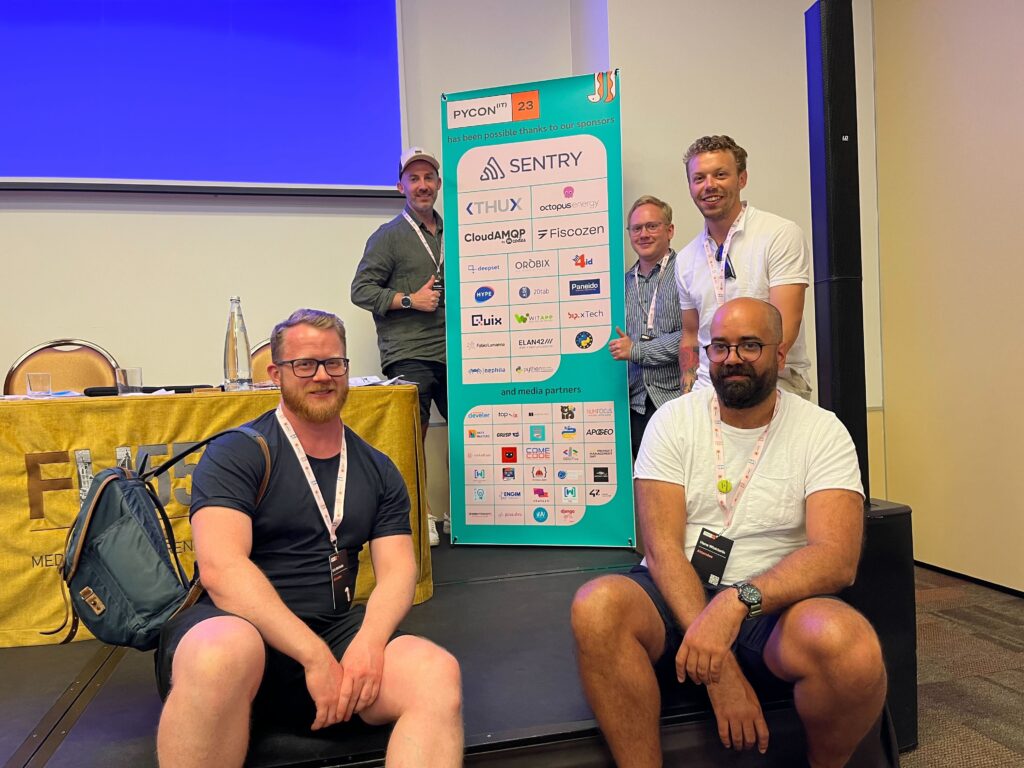

Last week, our team had the incredible opportunity to attend PyCon Italy, one of the most renowned conferences for Python enthusiasts in Europe. Held in the beautiful city of Florence, this year’s event was a hub of innovation, where developers and industry experts gathered to discuss the latest trends, share insights, and explore the future of Python. In this blog post, we will take you through some of the key highlights and takeaways from our visit to PyCon Italy 2023.
Parallel Steps in Continuous Deployment (CD) Environment:
One of the intriguing topics discussed at the conference was the implementation of parallel steps in a Continuous Deployment (CD) environment. The speakers emphasized the significance of breaking down complex processes into smaller, manageable steps to enhance efficiency and reduce deployment times. By executing multiple tasks concurrently, teams can optimize their CD pipelines and achieve faster release cycles without compromising quality.
Tests:
Slow tests can significantly impact development speed and productivity, making it essential to identify and optimize them. By employing strategies like parallel test execution, test prioritization, and mocking external dependencies, developers can achieve faster feedback loops and accelerate their development workflows.
Relational Data in Documents:
The concept of managing relational data within document-oriented databases was a topic of great interest at PyCon Italy. The prevailing consensus was to embed data as much as possible, reducing the need for frequent joins and improving query performance. However, it was also noted that if there is a requirement to access an object on its own, it might be beneficial not to embed it, opting for a separate document instead.
Efficiency in Code:
Several speakers presented various techniques and tools to enhance code efficiency. These included leveraging concurrency, implementing caching mechanisms, and utilizing queuing systems. By employing these strategies, developers can optimize performance, reduce response times, and scale their applications effectively. Additionally, packaging code to create lightweight Docker images by importing only necessary dependencies was emphasized as a best practice.
Exploring AI Python Infrastructure at Scale:
A session that caught our attention was the talk on creating an AI Python infrastructure that works at a reasonable scale. The speaker delved into the challenges of building and maintaining scalable AI systems and shared insights into efficient ways to handle the complexities. Topics covered included leveraging concurrency, caching, and queuing mechanisms to streamline AI workflows and improve overall system performance.
The Importance of Information Security:
A recurring theme throughout the conference was the criticality of information security. The attendees were reminded never to make their Git repositories public and to consistently rotate their encryption keys to safeguard sensitive data. Additionally, an interesting session on hacking your own code to identify vulnerabilities highlighted the significance of proactive security measures in the development process.
Cutting-Edge Tools and Libraries:
PyCon Italy also showcased several cutting-edge tools and libraries that are shaping the Python ecosystem. Holoviz, a powerful data visualization library for Python, was presented as a valuable resource for creating interactive visualizations. AsyncAPI, a specification for designing and documenting event-driven APIs, garnered attention for its ability to facilitate seamless communication between microservices.
Cultivating Positive Workplace Culture:
A thought-provoking talk at PyCon Italy emphasized that workplace culture is not just a trend but a vital aspect of team success. Speakers emphasized the importance of fostering inclusive environments, encouraging collaboration, and supporting individual growth. They highlighted that investing in a positive workplace culture can significantly impact employee satisfaction, productivity, and overall team dynamics.
Scaling Python Applications with Celery on AWS ECS:
The conference also featured a session on leveraging Celery, a distributed task queue, to scale Python applications on AWS ECS (Elastic Container Service). The speaker demonstrated how to configure and deploy Celery workers in a containerized environment, enabling efficient task execution and horizontal scalability. The presentation provided valuable insights for developers working with distributed systems and managing heavy workloads.
Conclusion:
Attending PyCon Italy 2023 was a truly enriching experience for our team. The conference offered valuable insights into the latest developments in Python, cutting-edge tools and libraries, and best practices to enhance productivity and efficiency. From discussions on parallel steps in CD environments to exploring novel ways of managing relational data, PyCon Italy provided a platform to learn, network, and stay at the forefront of Python development. We look forward to implementing the knowledge gained and applying these insights to our projects, as we continue our journey in the world of Python programming.